

Hey there! As a supplier of Polymer Dosing Systems, I often get asked about the types of polymers that can be used in these systems. Well, let's dive right in and explore the different polymers suitable for polymer dosing systems.
Anionic Polymers
Anionic polymers are one of the most commonly used types in polymer dosing systems. They have a negative charge, which makes them great for treating water and wastewater that contain positively charged particles. These polymers are often used in applications like coagulation and flocculation.
In water treatment plants, anionic polymers help in removing suspended solids, such as clay, silt, and organic matter. They work by binding to the positively charged particles, causing them to clump together and settle out of the water. This process is crucial for improving water clarity and reducing turbidity.
One of the advantages of anionic polymers is their versatility. They can be used in a wide range of pH levels, from acidic to alkaline. This makes them suitable for different types of water sources, including surface water, groundwater, and industrial wastewater.
Cationic Polymers
Cationic polymers, on the other hand, have a positive charge. They are mainly used for treating water and wastewater that contain negatively charged particles, such as bacteria, viruses, and some types of organic matter.
In wastewater treatment, cationic polymers are often used in the sludge dewatering process. They help in separating the water from the sludge, making it easier to handle and dispose of. By adding cationic polymers to the sludge, the negatively charged particles in the sludge are neutralized, causing them to flocculate and form larger aggregates. These aggregates can then be easily removed by mechanical means, such as a Sludge Dewatering Screw Press.
Cationic polymers are also effective in removing color and odor from wastewater. They can react with the organic compounds in the water, breaking them down and reducing their concentration. This helps in improving the quality of the treated water and making it suitable for reuse or discharge.
Non - ionic Polymers
Non - ionic polymers have no charge. They are typically used in applications where the water chemistry is complex or where the charge of the particles is not well - defined. Non - ionic polymers are often used in combination with anionic or cationic polymers to enhance the flocculation process.
In some industrial processes, non - ionic polymers are used to control the viscosity of fluids. They can thicken or thin out a liquid, depending on the application. For example, in the oil and gas industry, non - ionic polymers are used in drilling fluids to improve their rheological properties.
Non - ionic polymers are also used in the paper and pulp industry. They help in improving the strength and quality of the paper by binding the fibers together. This results in a more durable and higher - quality product.
Amphoteric Polymers
Amphoteric polymers contain both positive and negative charges. They are designed to work in a wide range of pH conditions and can adapt to different types of water and wastewater. These polymers are particularly useful in treating water that has a variable composition or where the charge of the particles can change.
In some wastewater treatment plants, amphoteric polymers are used to treat industrial effluents that contain a mixture of positively and negatively charged particles. They can effectively neutralize both types of charges, leading to better flocculation and sedimentation.
Amphoteric polymers are also used in the mining industry. They can be used to separate minerals from the ore by flocculating the valuable particles and allowing them to be easily recovered.

Factors to Consider When Choosing Polymers
When selecting polymers for a polymer dosing system, there are several factors to consider. First of all, the nature of the water or wastewater being treated is crucial. You need to know the type and concentration of the particles, the pH level, and the temperature of the water.
The application of the polymer dosing system also matters. For example, if you are using the system for water clarification, an anionic polymer might be a good choice. But if you are focusing on sludge dewatering, a cationic polymer would be more appropriate.
Cost is another important factor. Different polymers have different prices, and you need to balance the performance of the polymer with its cost. Sometimes, a combination of polymers might be more cost - effective than using a single polymer.
How Our Polymer Dosing System Works with Different Polymers
Our Polymer Dosing System is designed to work seamlessly with all types of polymers. It has a precise dosing mechanism that ensures the right amount of polymer is added to the water or wastewater at the right time.
The system can handle both liquid and powder polymers. For liquid polymers, the system has a pumping mechanism that accurately meters the polymer into the process. For powder polymers, there is a dissolution unit that ensures the polymer is properly dissolved before being added to the water.
We also offer customized solutions based on your specific needs. Whether you are treating municipal wastewater, industrial effluent, or water for a specific industrial process, our team can help you select the right polymer and configure the dosing system accordingly.
Related Systems in Our Portfolio
In addition to our Polymer Dosing System, we also offer other related systems that can work in conjunction with it. For example, our Cavitation Air Flotation System is a great option for removing suspended solids from water. It uses cavitation to create tiny air bubbles that attach to the particles and float them to the surface for easy removal.
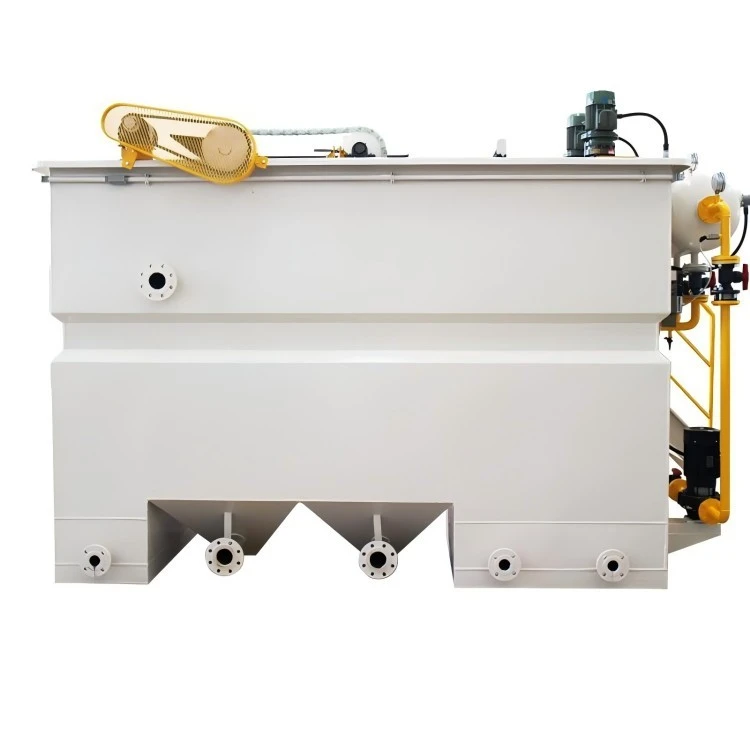
Our Daf System For Water Treatment is another effective solution for water treatment. It uses dissolved air flotation to separate solids from liquids. This system can be used in combination with the polymer dosing system to achieve better treatment results.
Conclusion
In conclusion, there are several types of polymers that can be used in a polymer dosing system, including anionic, cationic, non - ionic, and amphoteric polymers. Each type has its own unique properties and applications, and the choice of polymer depends on the nature of the water or wastewater being treated and the specific requirements of the application.
Our Polymer Dosing System is designed to work with all these polymers, providing a reliable and efficient solution for water and wastewater treatment. If you are in the market for a polymer dosing system or need help with polymer selection, don't hesitate to reach out. We're here to help you find the best solution for your needs.
References
- Water Treatment Handbook, various authors
- Polymer Science and Technology textbooks