

As a supplier of small screw conveyors, I understand the significance of sealing performance in these essential industrial machines. A well - sealed small screw conveyor can prevent material leakage, reduce environmental pollution, and improve the overall efficiency of the conveying process. In this blog, I will share several effective ways to enhance the sealing performance of small screw conveyors.
1. Select High - Quality Sealing Materials
The choice of sealing materials is fundamental to achieving good sealing performance. Different materials have different properties, and the selection should be based on the characteristics of the conveyed materials, such as their temperature, corrosiveness, and particle size.
For general applications where the conveyed materials are not highly corrosive and the temperature is relatively low, rubber seals are a common and cost - effective choice. Rubber has good elasticity, which allows it to adapt to small deformations and gaps, providing a tight seal. For example, nitrile rubber (NBR) is resistant to oil and many chemicals, making it suitable for applications involving oily or slightly corrosive materials.
In high - temperature environments, silicone rubber seals can be used. Silicone rubber can withstand temperatures up to 200 - 300 degrees Celsius, maintaining its sealing properties even under extreme heat. If the conveyed materials are highly corrosive, such as acids or alkalis, fluororubber (FKM) is a better option. FKM has excellent chemical resistance and can resist a wide range of corrosive substances.
2. Optimize the Sealing Structure Design
The design of the sealing structure plays a crucial role in improving the sealing performance. There are several common sealing structures for small screw conveyors, and each has its own advantages and application scenarios.
Labyrinth Seals
Labyrinth seals are a non - contact sealing method. They consist of a series of grooves and ridges that create a tortuous path for the leakage of materials. This structure effectively reduces the leakage rate by increasing the flow resistance of the materials. Labyrinth seals are suitable for applications where the conveyed materials are dry and have low particle size. They require little maintenance and have a long service life.
Packing Seals
Packing seals are made of flexible materials, such as graphite or asbestos - free packing materials. These materials are packed around the shaft of the screw conveyor to form a seal. Packing seals can adapt to different shaft diameters and operating conditions. They are relatively easy to install and replace. However, they may require regular tightening to maintain the sealing performance, especially in high - pressure applications.
Mechanical Seals
Mechanical seals are a more advanced sealing solution. They consist of two flat surfaces (usually made of hard materials such as ceramic or carbide) that are pressed together by a spring. Mechanical seals provide a very high - level of sealing performance, especially in applications where leakage prevention is critical. They are suitable for high - speed and high - pressure operations. However, they are more expensive and require more precise installation and maintenance.

3. Ensure Precise Installation
Proper installation is essential for the sealing performance of small screw conveyors. Even the best sealing materials and structures will not work effectively if they are not installed correctly.
During the installation process, it is necessary to ensure that the conveyor components are properly aligned. Misalignment can cause uneven stress on the seals, leading to premature wear and leakage. For example, the shaft of the screw conveyor should be centered accurately in the housing to ensure that the seals fit evenly around it.
The installation of seals also requires attention to detail. Seals should be installed cleanly and without any damage. For rubber seals, they should be lubricated with a suitable lubricant before installation to facilitate the installation process and prevent damage to the seal surface. When installing packing seals, the packing should be wound evenly around the shaft, and the compression force should be adjusted appropriately to ensure a good seal.
4. Regular Maintenance and Inspection
Regular maintenance and inspection are necessary to keep the sealing performance of small screw conveyors at an optimal level.
Inspection should be carried out regularly to check for signs of wear, damage, or leakage in the seals. Visual inspection can be used to detect obvious damage, such as cracks or tears in the rubber seals. For more in - depth inspection, non - destructive testing methods, such as ultrasonic testing, can be used to detect internal damage in the seals.
Maintenance work includes replacing worn - out seals in a timely manner. When replacing seals, it is important to use the same type and specification of seals as the original ones to ensure compatibility. In addition, the sealing surfaces should be cleaned and polished before installing new seals to ensure a good contact between the seal and the sealing surface.
5. Consider the Operating Environment
The operating environment of the small screw conveyor can also affect its sealing performance. For example, in a dusty environment, dust can enter the conveyor and cause abrasion to the seals, reducing their sealing performance. In such cases, additional dust - proof measures can be taken, such as installing dust covers or using air - curtain seals.
In a humid environment, corrosion may occur on the metal parts of the conveyor and the seals. To prevent corrosion, anti - corrosion coatings can be applied to the metal surfaces, and moisture - resistant sealing materials can be selected.
Related Products and Applications
In the field of solid - liquid separation, our small screw conveyors can be used in various applications. For example, in a Flocculation Plant, small screw conveyors can be used to transport flocculants or separated solids. The good sealing performance of our conveyors ensures that there is no leakage of these substances, which is crucial for the normal operation of the flocculation process.
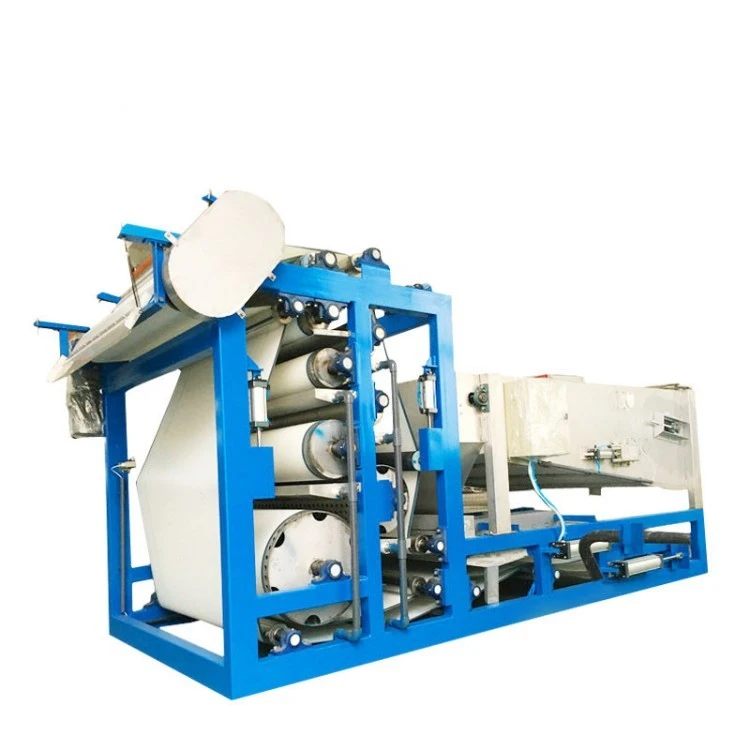
In a sewage treatment plant, Filter Press For Sewage Treatment Plant often requires the transportation of sludge. Our small screw conveyors can effectively transport the sludge from one process to another, with excellent sealing performance to prevent the leakage of sludge and reduce environmental pollution.
In the oil - water separation process, Oil Water Separator Tank may need to convey separated oil or water. Our small screw conveyors can be customized to meet the specific requirements of this application, ensuring reliable sealing and efficient transportation.
Conclusion
Improving the sealing performance of small screw conveyors is a comprehensive task that involves the selection of high - quality sealing materials, optimization of the sealing structure design, precise installation, regular maintenance, and consideration of the operating environment. As a supplier of small screw conveyors, we are committed to providing our customers with products with excellent sealing performance. If you are interested in our small screw conveyors or have any questions about improving the sealing performance, please feel free to contact us for procurement and negotiation. We look forward to working with you to meet your industrial conveying needs.
References
- Perry, R. H., & Green, D. W. (1997). Perry's Chemical Engineers' Handbook. McGraw - Hill.
- Brown, R. C. (2005). Introduction to Powder Technology. Wiley - VCH.
- Mills, P. L. (2009). Sealing Technology Handbook. Elsevier.