

Sludge Aging vs. Sludge Poisoning
These two problems can produce similar symptoms but have very different causes.
| Problem | Typical Cause | Development |
|---|---|---|
| Sludge poisoning | Toxic or inhibitory substances enter the biological system | Usually sudden |
| Sludge aging | Excessive sludge age, low F/M ratio, insufficient sludge wasting, etc. | Gradual and chronic |
Understanding this difference is important because the corrective measures are completely different.
How to Confirm Sludge Aging With Laboratory Indicators
Visual observations provide only a preliminary diagnosis. Laboratory data should be used together with field observations to make a more reliable assessment.
Sludge Age (SRT)
A significantly high sludge retention time (SRT) is one of the most important indicators.
When sludge remains in the biological system for an excessively long period without sufficient wasting, old biomass and inert solids gradually accumulate.
F/M Ratio
A very low food-to-microorganism (F/M) ratio generally indicates that there is insufficient biodegradable organic matter relative to the amount of biomass in the system.
For example, an F/M ratio below approximately 0.05–0.1 kg BOD₅/(kg MLSS·d) may indicate extremely low loading conditions, depending on the treatment process and design.
MLSS
An abnormally high MLSS concentration can result from continuous sludge accumulation.
However, a high MLSS value does not necessarily mean that the system contains a high amount of active biomass. A significant portion may consist of dead biomass and inert solids.
SVI
A very low Sludge Volume Index (SVI) may indicate excessively dense and compact sludge.
An SVI below approximately 50–70 mL/g can be associated with dense, rapidly settling sludge and may occur under conditions opposite to typical sludge bulking.
MLVSS/MLSS Ratio
A continuously decreasing MLVSS/MLSS ratio indicates that the proportion of active or volatile biomass is declining relative to the total suspended solids.
This can indicate increasing accumulation of dead biomass and inorganic inert material.
Five Main Causes of Sludge Aging
1. Insufficient Sludge Wasting
Failure to discharge excess sludge in a timely manner allows old sludge to accumulate continuously, causing the actual sludge age to exceed the process design range.
2. Prolonged Low Influent Load
During periods of reduced production, seasonal fluctuations, or low domestic wastewater flow, the influent organic load may become very low.
Microorganisms receive insufficient food and remain in a chronic starvation condition, accelerating endogenous respiration and sludge aging.
3. Excessive Aeration
To achieve better effluent quality, operators sometimes increase aeration excessively and maintain DO above 3–4 mg/L for long periods.
Excessive aeration can increase energy consumption and endogenous respiration and may contribute to deterioration of sludge floc structure under prolonged low-load conditions.
4. Low Temperature
During cold seasons, microbial growth and reproduction rates decrease.
If sludge wasting is not adjusted accordingly, the effective sludge age can increase. New biomass grows more slowly while old sludge remains in the system, further aggravating the aging problem.
5. Excessive Return Sludge Circulation
An excessively high return activated sludge (RAS) ratio can cause old sludge to circulate repeatedly between the secondary clarifier and aeration tank.
If sludge wasting is insufficient, this circulation does not remove the aged biomass from the system. Instead, old sludge continues to accumulate, creating a cycle that aggravates sludge aging.
How to Correct Sludge Aging: 5 Practical Steps
1. Increase Sludge Wasting and Reduce SRT
The most fundamental solution is to gradually remove excess aged sludge.
Continuous sludge wasting at a controlled rate allows old and inert sludge to be replaced by new biomass.
Do not remove a large amount of sludge suddenly. A sharp reduction in MLSS can destabilize the biological system and may even cause treatment failure.
Instead, increase sludge wasting gradually and adjust the SRT toward the appropriate process design range.
2. Optimize Aeration and Control DO
Avoid excessive aeration.
For many conventional aerobic activated sludge processes, maintaining DO around 2.0–2.5 mg/L in the aerobic zone can be appropriate, although the optimum value depends on the specific process, loading, nitrification requirements, and effluent targets.
The objective is not simply to maximize oxygen supply but to provide sufficient oxygen for biological treatment without unnecessary aeration.
3. Improve the F/M Ratio
When the system operates under a prolonged low organic load, the operating conditions should be reviewed.
Where process configuration permits, the effective aeration volume can be adjusted. When the influent carbon source is extremely low, an appropriate external carbon source, such as sodium acetate or methanol, may be considered to support biological activity.
Any external carbon addition should be based on actual process requirements and controlled carefully.
4. Optimize the Return Sludge Ratio
The return activated sludge ratio should be adjusted according to sludge settling characteristics, sludge blanket depth, MLSS requirements, and clarifier performance.
Appropriate control of RAS can help maintain the desired biomass concentration while preventing unnecessary sludge circulation.
5. Do Not Use Flocculants to Hide the Problem
When the effluent becomes turbid, adding a large amount of flocculant may temporarily improve water clarity by forcing fine particles to settle.
However, this does not solve the underlying biological problem.
If sludge aging remains unresolved, poor sludge characteristics and unstable effluent quality may return repeatedly.
The priority should therefore be to restore healthy biological sludge, rather than simply treating the visible symptom.
Frequently Asked Questions
What is sludge aging in wastewater treatment?
Sludge aging occurs when activated sludge remains in the biological system for too long, often under low organic loading conditions. The biomass gradually loses activity, while dead and inert solids accumulate.
What are the main signs of aged sludge?
Typical signs include dark sludge color, rapid but dense settling, turbid supernatant, fine floating sludge, poor flocculation, low SVI, high MLSS with a declining MLVSS/MLSS ratio, and gradually deteriorating COD and ammonia removal.
Can excessive aeration cause sludge aging?
Excessive aeration can contribute to sludge deterioration, particularly under prolonged low-load conditions. Maintaining unnecessarily high DO increases energy consumption and can promote endogenous respiration. Aeration should therefore be matched to the actual oxygen demand of the process.
How do you recover aged activated sludge?
The main approach is to gradually increase sludge wasting, reduce excessive SRT, optimize DO and RAS operation, and restore an appropriate F/M ratio. Large-scale sludge removal should be avoided because a sudden MLSS reduction can destabilize the biological system.
Is low SVI always a sign of sludge aging?
No. Low SVI indicates dense, rapidly settling sludge but does not by itself prove sludge aging. SVI should be evaluated together with SRT, F/M, MLSS, MLVSS/MLSS, effluent quality, and actual sludge appearance.
Should flocculants be added when aged sludge causes turbid effluent?
Flocculants may temporarily improve solids removal, but they do not solve the underlying biological problem. The priority should be to identify and correct the cause of sludge aging.
Equipment Application in Activated Sludge Systems
Maintaining healthy activated sludge also depends on stable mixing, oxygen transfer, and sludge circulation.
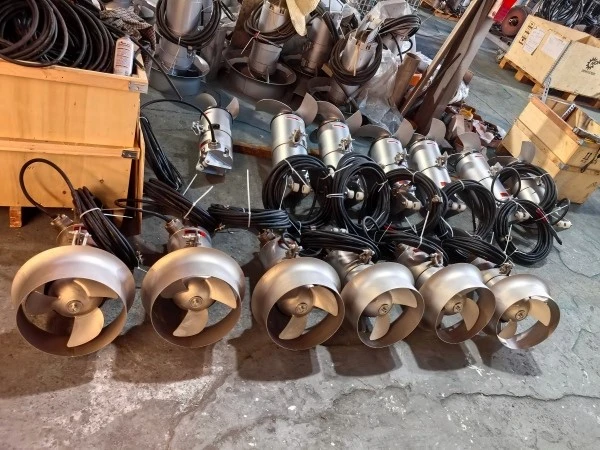
Submersible mixers can help maintain uniform mixing in biological tanks, prevent excessive solids deposition, and improve contact between microorganisms and wastewater. Proper mixing is particularly important in anoxic and anaerobic zones where excessive aeration is undesirable.
Submersible recirculation pumps can be used for internal sludge or wastewater circulation, helping maintain the required flow between different biological treatment zones.

Aeration equipment, including fine-bubble diffusers and jet aeration systems, supplies oxygen required by aerobic microorganisms. The aeration system should be selected and controlled according to actual oxygen demand rather than simply operating at maximum capacity.
The equipment selection and operating strategy should ultimately be based on the wastewater characteristics, tank dimensions, treatment process, MLSS, oxygen demand, and required effluent quality.
